

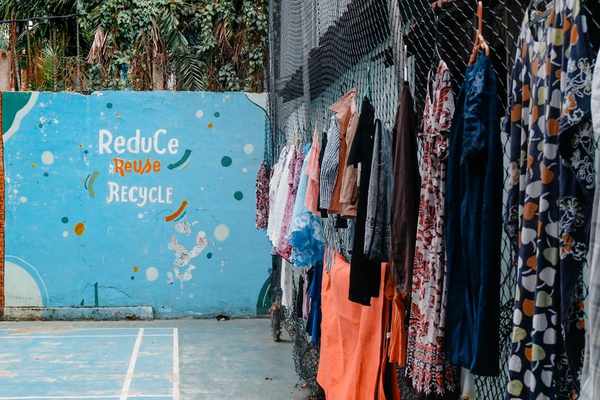
A dress for one wedding. A coat for a weekend away. A statement outfit that might never leave the wardrobe again. Clothing rental offers an alternative to buying everything we wear, but borrowing a garment does not automatically make it environmentally friendly. The answer depends on what the rental replaces and how the clothing reaches its next wearer.
Clothing rental sustainability is best judged as a system: garment production, repeated use, delivery, cleaning, packaging and disposal. Renting can make sense for occasional needs. It can also create extra consumption when it becomes another way to refresh a wardrobe constantly.
The crucial question: what purchase did you avoid?
Imagine renting a formal dress instead of buying one that would sit unworn after a party. Several people may wear that dress, spreading its manufacturing impacts across more occasions. Now imagine renting four trendy outfits every month while continuing to buy just as much clothing. The garments circulate, but overall consumption rises.
This difference is called purchase displacement: whether accessing an existing item genuinely prevents a new purchase. It matters more than the attractive idea of sharing on its own.
A 2025 study in The International Journal of Life Cycle Assessment compared circular clothing models with conventional purchasing. Its scenarios found greenhouse gas reductions of 14–26% when half of clothing acquisitions shifted to circular models. Short-term rental produced the smallest modeled improvement, however, and researchers could not rule out increased emissions in that case. Those figures describe particular scenarios, not guaranteed savings for every rental.
When renting tends to make sense
Occasion wear
Wedding guest outfits, evening dresses and formal suits are strong candidates. Renting a well-made item for one event can avoid buying something with little future use. The case strengthens when a nearby provider keeps each garment in circulation for many rentals.
Temporary clothing needs
Maternity clothing, children’s occasion outfits and specialist clothing for short-lived needs may work well as rentals. The advantage comes from meeting a temporary requirement without repeatedly buying replacements. For everyday children’s basics, hand-me-downs or second-hand purchases may be simpler.
Trying before committing
A rental might prevent a regretted purchase if it reveals that a style, fit or fabric does not suit your life. But testing pieces is only beneficial if it actually changes what you buy afterward.
The environmental costs behind a rented outfit
Delivery and returns
Online fashion rental services typically involve an outbound shipment and a return. Warehouses, sorting operations and customer travel add impacts. Consolidated standard shipping may be more efficient than urgent individual deliveries. Collecting locally on an existing journey may help avoid a dedicated car trip.
Cleaning between wearers
Rented clothing needs hygienic care, often after each customer. Washing, drying, pressing and some dry-cleaning methods use energy, water or chemicals. Impacts vary with the material, equipment and cleaning frequency. Delicate items needing intensive care after one evening may be less compelling than sturdy, easy-care garments.
Packaging and upkeep
Protective bags, boxes and hangers keep items presentable. Reusable packaging helps when it survives enough cycles and actually gets returned. Repairs and storage require resources too, although sensible maintenance can keep a garment usable longer.
A formalwear rental life-cycle assessment published in Environment, Development and Sustainability found packaging to be a substantial contributor under its assumptions. The results underline how much the service design matters; they should not be applied unchanged to every rental provider.
More wears do not automatically mean less impact
The promise of circular fashion is to get more useful service from clothing already manufactured. Yet rental inventory is not indestructible. A garment that fades quickly, loses shape after repeated cleaning or needs frequent replacement may deliver fewer wears than expected.
Rental companies can also chase fast-changing trends. When fashionable stock becomes outdated after a season, renting may recreate the same rapid turnover it claims to challenge. The Ellen MacArthur Foundation has warned that circular business models must reduce dependence on new production rather than simply supplement traditional sales.
Subscriptions deserve particular scrutiny. A monthly allowance can make exchanges feel consequence-free even though each swap requires handling and transport. Fewer, more purposeful rentals generally offer a clearer sustainability case than maximizing the number of shipments included in a plan.
A practical wedding-guest comparison
Suppose you need an outfit for a Saturday wedding. First, check whether something you own already fits the occasion. Rewearing it avoids both new production and rental logistics. If not, consider borrowing from a friend or buying second-hand, especially if you expect to wear the item again.
If neither works, a local rental may be sensible. Compare a nearby shop with a distant delivery service, ask how garments are cleaned and check whether packaging is reusable. An accurate size chart or fitting appointment can prevent ordering multiple sizes and making avoidable returns.
The important point is to compare realistic alternatives, not automatically assume the only other choice is buying a brand-new outfit.
How to choose a better rental service
Before booking, look for details rather than broad sustainability claims. How many times are garments typically rented? Does the company repair items and explain what happens when they leave the collection? Are deliveries consolidated and packaging reused? Does it describe its cleaning practices?
Make your own rental purposeful. Book only what you need, choose sizes carefully, avoid express delivery when possible and return garments on time. None of these steps removes the provider’s environmental footprint, but each can reduce avoidable impacts.
Remember that rental is only one option among buying less, repairing clothes and choosing second-hand clothing. For everyday pieces, a smaller, well-used wardrobe often remains the most practical foundation.
Frequently asked questions
Is renting clothes better than buying new?
It can be, particularly when a rental replaces a rarely worn purchase and the item serves many customers. Benefits are less certain if buying habits do not change or logistics are intensive.
Does clothing rental count as circular fashion?
Yes, rental is a circular business model, but a genuinely better outcome depends on garments staying useful longer and fewer new items being produced.
Does dry cleaning cancel out rental benefits?
Not necessarily. Impacts vary by cleaning method and garment, while manufacturing a new item also carries environmental costs. Compare the full lifecycle, not cleaning alone.
Should I rent everyday clothes?
For frequently worn basics, keeping durable clothes and maintaining them may be more convenient and lower impact than repeated exchanges. Rental is easier to justify for occasional needs.
Making access count
Clothing rental works best when it changes what we buy, not simply what we wear for a day. Sharing a durable formal outfit across many people can make practical sense. Constant wardrobe refreshes, extra deliveries and rapid turnover weaken the case. Choose the option that meets a genuine need with the least new production and unnecessary movement, even when that means wearing something you already own.
