

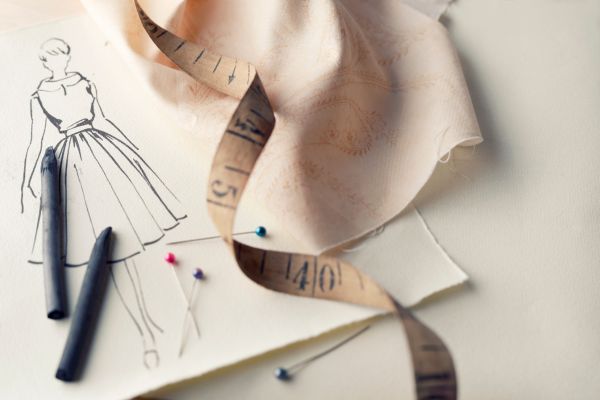
Fashion has always reflected the culture and spirit of its time, but few traditions in clothing carry as much artistic prestige as haute couture. The history of haute couture tells a story that stretches far beyond garments and runways. It is a tale of craftsmanship, cultural shifts, creativity, and the relationship between art and society.
Haute couture represents the highest level of fashion design—clothing made by hand, tailored precisely to a client’s body, and constructed using exceptional materials and techniques. While modern fashion moves quickly, the world of couture remains rooted in tradition, artistry, and painstaking detail.
To understand haute couture is to explore how fashion transformed from simple dressmaking into a celebrated art form.
The Origins of Haute Couture in 19th-Century Paris
The history of haute couture begins in Paris during the mid-1800s. Although skilled dressmakers had existed for centuries, fashion changed dramatically with the emergence of designer-led clothing houses.
Before this shift, wealthy women typically visited dressmakers who produced garments based on the client’s instructions. Designs were not credited to specific creators, and clothing functioned more as a service than an artistic expression.
That dynamic changed with the arrival of Charles Frederick Worth, an English designer working in Paris during the 1850s. Worth revolutionized fashion by presenting his own designs to clients instead of simply executing their requests. He also introduced the concept of fashion collections and used live models to display garments.
This innovation marked a turning point. Clothing was no longer just tailored—it was designed, authored, and recognized as creative work.
Worth’s approach laid the foundation for the modern couture house and established Paris as the global center of high fashion.
Paris Becomes the Capital of High Fashion
By the late 19th century, Paris had firmly established itself as the heart of couture. Wealthy clients from Europe, Russia, and the United States traveled to the city to commission elaborate gowns and wardrobes.
Couture houses flourished during this period. Designers created garments with intricate embroidery, luxurious fabrics, and elaborate silhouettes that reflected the elegance of the era.
The rise of haute couture also coincided with the growth of fashion journalism. Illustrated magazines and early fashion publications began documenting seasonal trends, spreading Parisian style across the world.
At the same time, the industry began developing rules and standards to protect originality. Designs were considered intellectual creations, and couture houses sought ways to guard against imitation.
These developments helped formalize haute couture as both a creative discipline and a structured industry.
The Establishment of Couture Institutions
As the couture industry grew, it required organization and regulation. In 1868, the Chambre Syndicale de la Haute Couture was established in Paris to oversee the profession.
This organization set strict criteria defining what could officially be considered haute couture. To qualify, fashion houses had to maintain ateliers in Paris, employ skilled artisans, and produce custom garments made to measure for private clients.
Designers were also required to present collections twice a year.
These regulations ensured that haute couture remained synonymous with exceptional craftsmanship and exclusivity. Even today, the term is legally protected in France and reserved for houses that meet these exacting standards.
This institutional structure became a cornerstone in the continuing history of haute couture, preserving its traditions while guiding its evolution.
The Golden Age of Couture in the Early 20th Century
The early decades of the 20th century are often considered the golden age of haute couture. During this time, designers pushed the boundaries of style and creativity while responding to the cultural changes of a rapidly modernizing world.
Paul Poiret was among the designers who reshaped fashion during this era. Rejecting restrictive corsets, he introduced flowing silhouettes inspired by art, theater, and global influences.
Later, Coco Chanel revolutionized women’s fashion by introducing relaxed elegance. Her designs emphasized comfort, simplicity, and practicality—qualities that reflected changing social roles for women.
Elsa Schiaparelli added an element of surrealism to couture during the 1930s, collaborating with artists and experimenting with bold colors, unconventional materials, and imaginative designs.
These designers expanded the definition of couture, proving that fashion could exist at the intersection of art, culture, and identity.
War, Recovery, and the Birth of the “New Look”
The Second World War disrupted the couture industry dramatically. Fabric shortages, economic hardship, and political instability forced many fashion houses to close or scale back operations.
Yet couture did not disappear. Designers adapted to wartime conditions, creating simpler garments while maintaining the craftsmanship that defined the industry.
After the war ended, fashion experienced a dramatic revival.
In 1947, Christian Dior introduced his famous “New Look,” characterized by full skirts, cinched waists, and soft shoulders. The design celebrated femininity and luxury at a time when people longed for beauty and optimism.
The New Look quickly became a global sensation, restoring Paris’s status as the center of fashion innovation and marking a new chapter in the history of haute couture.
The Influence of Couture on Global Fashion
Although couture garments are created for a small number of clients, their influence extends far beyond the couture salons.
Throughout the 20th century, haute couture shaped mainstream fashion trends. Designers introduced silhouettes, fabrics, and aesthetics that were later adapted into ready-to-wear collections.
Fashion magazines, photography, and film played an important role in spreading these ideas worldwide. Images of couture gowns appeared in editorial spreads and Hollywood productions, bringing the glamour of Parisian fashion to international audiences.
This process created a bridge between elite craftsmanship and everyday clothing, allowing couture concepts to inspire mass fashion while maintaining their exclusive origins.
The Rise of Ready-to-Wear and Changing Fashion Culture
By the 1960s and 1970s, the fashion industry began shifting toward ready-to-wear clothing. These garments were produced in standardized sizes and sold directly in stores, making fashion more accessible to a broader audience.
While couture remained prestigious, its dominance in the fashion world gradually declined. Some couture houses struggled to survive as consumer tastes evolved and economic realities changed.
Designers like Yves Saint Laurent responded to this transformation by launching ready-to-wear lines alongside their couture collections.
This shift reflected a changing cultural landscape. Fashion was becoming faster, more democratic, and increasingly influenced by youth culture.
Even so, couture continued to hold symbolic importance as the pinnacle of craftsmanship and design innovation.
Haute Couture in the Modern Era
Today, the world of haute couture is smaller than it once was, but its influence remains powerful. Only a limited number of fashion houses are officially recognized as couture houses by the French fashion authority.
Modern couture shows often feel like theatrical performances. Designers present garments that combine traditional techniques with experimental materials, innovative silhouettes, and artistic storytelling.
Technology has also begun to shape couture in subtle ways. Advanced textiles, digital design tools, and new production methods allow designers to explore forms that were previously impossible.
Yet despite these innovations, the essence of couture remains unchanged.
Every garment is still handcrafted, often requiring hundreds or even thousands of hours of work from skilled artisans. Embroiderers, pattern makers, seamstresses, and textile specialists collaborate to transform fabric into wearable art.
In an era dominated by fast fashion, couture stands as a reminder that clothing can still be an expression of patience, dedication, and artistry.
The Enduring Legacy of Haute Couture
The history of haute couture reveals more than the evolution of fashion—it reflects changing ideas about art, identity, craftsmanship, and luxury.
From the pioneering work of Charles Frederick Worth to the groundbreaking designs of Dior, Chanel, and many others, couture has continually reinvented itself while preserving its commitment to excellence.
Although the industry has adapted to modern realities, the core principles remain intact. Haute couture celebrates creativity, individuality, and the remarkable skill of the artisans who bring each design to life.
Conclusion
Looking back at the history of haute couture, it becomes clear that couture is far more than high-end clothing. It is a cultural tradition shaped by innovation, craftsmanship, and artistic vision.
Across more than a century, designers have used couture as a canvas for imagination, blending fashion with art, architecture, and social change. While the world around it has transformed, couture continues to symbolize the highest level of design and human creativity.
In a fast-moving fashion landscape, haute couture remains a quiet but powerful reminder that true artistry often takes time.
