

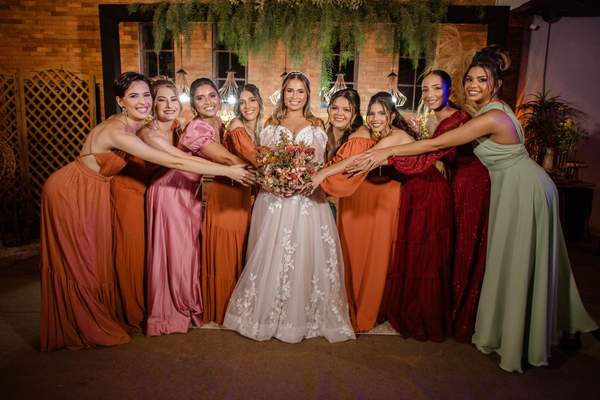
Choosing bridesmaid dress colors can feel surprisingly personal. A shade that looks beautiful on a swatch may feel too bright beside a garden ceremony, too muted in a ballroom, or completely different in photos. The best choice isn’t necessarily the trendiest shade. It’s one that suits the setting, works with the dresses themselves, and makes the bridal party look cohesive without demanding identical outfits.
Start with the atmosphere you want, then narrow your options using the season, venue, formality, and fabric. That approach is more useful than choosing a color solely because it looks pretty online.
Start With the Setting, Not a Color Trend
Picture the ceremony and reception backgrounds before collecting dress inspiration: green hedges, pale stone, dark wood, or an open coastline. Your bridesmaid color palette doesn’t need to match those surroundings, but it should look intentional beside them.
Consider the bride’s outfit and flowers too. If bouquets contain peach, cream, and coral, soft rose or muted terracotta dresses may support the arrangement better than a competing bright pink. Dresses should complement the overall scene rather than copy every decoration.
Bridesmaid Dress Colors for Each Season
Seasonal bridesmaid colors provide inspiration, not strict rules. The local landscape, time of day, and wedding atmosphere often matter more than the calendar.
Spring: Fresh, Soft, and Airy
Spring weddings suit sage, dusty blue, lavender, pale peach, and soft pink. These shades look fresh against new greenery. For outdoor ceremonies, try a slightly muted pastel; an extremely pale dress can appear almost white in bright photographs.
For a coordinated spring look, pair sage dresses with ivory bouquets and deeper green foliage. The palette feels seasonal without making every element pastel.
Summer: Clear Color or Relaxed Neutrals
Summer options include cornflower blue, periwinkle, coral, sea glass green, and warm champagne. Coastal celebrations often suit breezy blues and greens, while colorful garden weddings can carry stronger shades.
Fabric changes the effect. Light chiffon can make blue feel soft and casual, whereas glossy satin in a similar shade can look more formal. For an outdoor wedding, consider the weather and comfort alongside color.
Autumn: Earthy With Dimension
Terracotta, rust, cinnamon, olive, burgundy, and chocolate brown complement autumn foliage and rustic materials. You don’t need orange just because the leaves are changing; olive and deep wine feel equally appropriate.
For early autumn, dusty rose with taupe offers a softer transition. In a room already filled with brown and amber, choose a dress shade with enough contrast to stand out.
Winter: Rich, Clean, or Understated
Emerald, navy, deep plum, black, and charcoal suit winter celebrations, especially in formal interiors. Pale silver-blue or champagne can also work for a softer, minimalist wedding.
Dark dresses sometimes lose detail in dim photographs. Check how the actual material looks under artificial lighting before ordering for the whole bridal party.
Let the Venue Refine Your Palette
Two weddings in the same season may call for different bridal party dress colors. A beach ceremony might suit soft blue, muted teal, or sand. A barn wedding can carry olive, clay, and mauve. A formal hotel ballroom may favor navy, emerald, wine, or black.
The key is deciding whether dresses should blend with the backdrop or contrast with it. Sage may disappear against a densely green garden, while dusty blue provides separation without looking loud.
Lighting matters as much as architecture. Warm bulbs can give beige dresses a yellow cast, and cool light can make muted lavender look gray. View swatches under lighting similar to the venue’s whenever possible.
Match Color Depth to Wedding Formality
Color, fabric, and silhouette work together. Floor-length dresses in jewel tones often look formal, particularly in satin or velvet. Midi dresses in washed blues or warm pinks can feel relaxed. Yet black isn’t automatically formal, and blush isn’t automatically casual; styling and material change the impression.
Before settling on shades, compare bridesmaid dress silhouettes. Decide if you want a uniform line of matching cuts or a softer arrangement of individual styles.
How to Mix Shades Without Looking Random
Mismatched dresses feel intentional when boundaries are clear. Choose a color family, such as dusty rose through mauve, or a small complementary group like sage, clay, and champagne. Agree on undertones and how saturated the shades should be.
For five bridesmaids, try two sage dresses, two muted olive dresses, and one eucalyptus-colored dress. Arrange the samples side by side before buying so one unusually bright green doesn’t dominate the group.
If everyone chooses a different neckline or fabric, keeping colors close creates cohesion. If silhouettes are identical, two or three shades can add variety. Share actual fabric references rather than color names alone: one retailer’s “dusty blue” may be another’s bright cornflower.
Test the Fabric Before Committing
Phone screens cannot reliably communicate undertones, sheen, or transparency. Order swatches, then view them in daylight and warm indoor light. Hold them near ivory fabric similar to the bride’s outfit and, if possible, a sample bouquet.
For an outdoor ceremony followed by an evening reception, photograph three shortlisted swatches together outside in shade, near a window, and under warm household lighting. Choose the shade that remains pleasing across these conditions, not simply the one that looks best in direct sunshine. Assess the swatches in person too.
Ask bridesmaids how they feel about the proposed colors and fits. No shade flatters everybody in exactly the same way, so rigid skin-tone rules are less helpful than real feedback. Coordinated bridesmaid shoes and accessories can connect different dress shades without requiring identical outfits.
Frequently Asked Questions
Should bridesmaid dress colors match the wedding flowers?
No. Dresses and flowers only need to complement each other. Contrasting bouquets can look beautiful against solid dresses, while exact color matching sometimes makes the arrangement appear flat.
Can bridesmaids wear different colors?
Absolutely. Use a limited palette, agree on undertones and color depth, and compare fabric samples together. Coordinated variation looks more purposeful than choosing shades independently.
What colors work for weddings in any season?
Navy, dusty blue, sage, champagne, and muted pinks are versatile. The fabric, venue, flowers, and styling determine whether they feel fresh, warm, relaxed, or formal.
How early should we finalize the dress color?
Choose the palette before anyone orders. Leave time for retailer lead times, alterations, and exchanges, and verify that the shade is available in every required size and style.
Choose Colors That Work in Real Life
The best bridesmaid dress colors support the wedding rather than compete with it. Let the venue lead, use the season for inspiration, and test fabrics in realistic lighting. When the shades work together and the people wearing them feel comfortable, the result looks thoughtful both in person and in photographs.
