

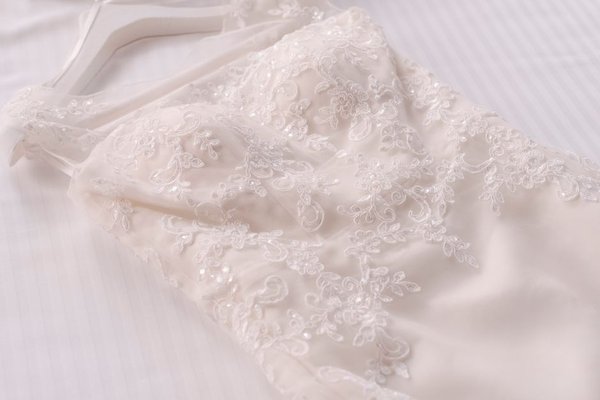
Two wedding dresses can share the same neckline and silhouette yet feel completely different when you put them on. One skirt falls in soft folds; another stands away from the body. One catches the light, while another lets embroidery take centre stage. Understanding wedding dress fabrics helps you shop beyond photographs and choose a gown that works for your venue, your style and the hours you will spend wearing it.
Start with drape, structure and texture
Drape describes how cloth falls and moves. Structure describes how well it holds a shape. Texture is what you see and feel on the surface, from smooth shine to raised floral patterns. These qualities matter as much as the dress’s outline. A fitted gown in fluid fabric moves differently from one made with a sculptural cloth.
Look beneath the surface, too. Linings, boning, underskirts and multiple layers can change the weight and comfort of bridal fabrics. The name on a product listing rarely tells the whole story.
Popular wedding gown materials explained
Satin: smooth, luminous and versatile
A satin wedding dress has a polished surface that reflects light beautifully. Satin is a weave, not a fibre: it can be made with silk, polyester or other yarns. Lightweight satin flows around the body, while heavier duchess satin can support fuller shapes. Smooth surfaces may show creases, seam lines and marks more readily. Ask what type of satin is used rather than assuming every satin gown feels alike.
Lace: detail with character
A lace wedding dress draws attention through its pattern rather than an uninterrupted surface. Fine Chantilly-style lace feels delicate and airy; corded or guipure lace creates stronger, more dimensional motifs. Lace is commonly layered over another fabric, so the lining determines much of the gown’s opacity and feel. Check whether the pattern continues neatly across seams and whether appliqués rub against your arms. Beautiful lace still needs to be comfortable.
Tulle: soft volume and floating layers
Tulle is a fine net often used for veils and layered skirts. Soft tulle produces a cloudlike effect, while stiffer varieties help create volume. It is familiar in romantic A-line and ball-gown designs. Although a single layer feels light, several layers plus a lining can make a dress substantial. Tulle may snag on rough flooring, jewellery or decorative chairs, so consider the setting as well as the photographs.
Crepe: understated and body-skimming
Crepe has a subtly grainy or pebbled surface and is prized for clean, modern lines. Depending on its weight and fibre content, it can fall softly or feel more substantial. Some stretch crepes allow additional movement, making them useful for fitted silhouettes. Because embellishment is often minimal, tailoring and undergarments become noticeable. Try sitting and walking in crepe before choosing a close-fitting gown.
Chiffon: fluid movement without stiffness
Chiffon is sheer, lightweight cloth that falls in soft, flowing folds. It works well for relaxed skirts, draped sleeves and airy overlays. A chiffon gown usually needs an opaque lining, and its movement can be exaggerated by outdoor breezes. It creates less natural volume than tulle or organza, appealing to brides who prefer an unstructured look. Comfort still depends on the layers beneath it.
Organza: sheer fabric with crispness
Organza looks delicate but has more body than chiffon. It can form sculptural tiers, flounces and skirts that hold their shape without looking dense. This crispness also means some organza feels less soft against bare skin and may show sharp folds. Compare organza and chiffon side by side: both are translucent, but one tends to stand away from the body while the other drapes downward.
Mikado and other structured options
Mikado is a substantial, finely woven bridal fabric often chosen for architectural necklines, pleats and full skirts. Taffeta is another crisp option, sometimes with a distinctive rustle. For a sculpted silhouette, these materials can do more visual work than embellishment. They can feel warmer or heavier, depending on construction.
Why fibre content and lining matter
Silk, polyester and blended fibres can all appear in wedding gown materials. A fabric name such as satin or crepe generally describes construction or finish, not necessarily what the yarn is made from. Fibre content affects cost, care and feel, but it does not guarantee comfort. A silk outer layer over a heavy synthetic lining may feel less airy than expected.
Ask the salon to identify the outer fabric, lining and any built-in support. Compare sample swatches against your skin, not just on a hanger. If you are researching wedding dress silhouettes, remember that the same cut can change dramatically in a lighter or firmer material.
Match the fabric to the day you are planning
Picture a summer garden ceremony with a lawn reception. A soft chiffon skirt could move easily, while long tulle layers might collect leaves or catch on outdoor furniture. In a formal indoor setting, structured mikado or satin may deliver the defined shape you want. Neither choice is automatically better: temperature, walking distance and dress construction all matter.
Think about photography too. Satin reflects highlights, crepe reads more quietly, and lace provides close-up texture. When exploring how to choose a wedding dress, compare photographs in natural and indoor light instead of judging every fabric under salon spotlights.
A fitting-room test worth doing
Once you find a promising gown, spend a few minutes moving as you would on the wedding day. Sit on a chair, raise your arms for a hug, take several long steps and turn around. Notice whether the lining twists, the bodice digs in or the skirt catches under your shoes. Examine the dress after sitting to see how visibly the fabric creases.
Ask how the hem, bustle and alterations will be handled. Delicate lace motifs, beaded overlays and multilayer skirts can complicate changes, so discuss wedding dress alterations before ordering. A gown should look beautiful while moving, not only while standing still.
Frequently asked questions
What is the lightest fabric for a wedding dress?
Chiffon and soft tulle are both lightweight choices, but the finished dress may contain several layers, a lining and structural support. Compare complete gowns rather than choosing by the outer fabric alone.
Is satin or crepe better for a simple wedding dress?
Choose satin for a smoother, more reflective finish and crepe for a generally softer, matte appearance. Both can work for minimalist designs; weight, fit and construction determine the final effect.
Are lace wedding dresses comfortable?
They can be, especially when the lace is soft and positioned over a comfortable lining. Check embroidered edges, sleeves and underarm areas for scratching or friction before committing.
Which fabric is best for a full wedding skirt?
Layered tulle creates soft volume, organza offers airy crispness, and heavier satin or mikado supports defined, structured shapes. Choose based on how you want the skirt to move as well as how full it looks.
Choosing a fabric you will enjoy wearing
The best wedding dress fabrics make the design feel like yours without fighting the practical realities of the day. Start with the appearance you love, then test drape, texture, support and movement in person. The right fabric should make you feel as confident walking down the aisle as you do admiring the dress in the mirror.
