

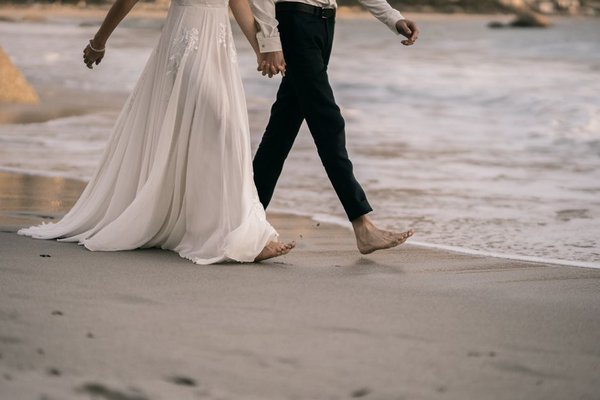
A dress that looks effortless in a bridal boutique can behave very differently on a beach. Sand catches long hems, coastal breezes lift loose layers, and humid air makes a heavily structured bodice less appealing. The best beach wedding dresses are chosen for the setting as much as the photograph: they let you walk naturally, stay comfortable, and still feel bridal.
That does not mean every seaside bride needs a simple slip dress. Romantic lace, soft sleeves, and sweeping skirts can all work. The trick is knowing which details help when the aisle is sand rather than a polished floor.
Choose Fabric by How It Moves
Fabric is the difference between a gown that feels beautiful for ten minutes and one you enjoy wearing all day. Check its weight, lining, and number of layers. A delicate-looking dress can still feel hot if it has several dense underskirts.
Chiffon and Georgette
Chiffon creates airy-looking skirts that float as you walk, making it popular for a lightweight bridal gown. Georgette offers texture and a slightly less slippery drape. Both come in different fibres, so the fabric name alone does not guarantee breathability. Try on the complete dress, including its lining, and notice how warm it feels after several minutes.
Light Crepe and Soft Satin
A slender crepe gown looks striking against water without needing extra volume. Choose a lighter construction with comfortable lining and space for full steps. Fluid satin can also work, although glossy finishes may show water spots or creasing. Handle swatches and check care instructions before deciding.
Lace and Embellishment
Light lace panels add texture without necessarily adding bulk. Heavy beading and multiple stiff tulle layers, meanwhile, add weight and catch sand. Fine netting may snag on rough decking. If you love sparkle, detail concentrated on the bodice is often more practical than decoration across the entire skirt.
Find a Silhouette for Uneven Ground
A-line gowns are a reliable starting point because the skirt leaves space around the legs without requiring a dramatic train. Empire-waist designs feel relaxed, while bias-cut slips offer a modern look. The best choice depends on support, fit, and how far you will walk.
A fitted mermaid silhouette is possible, especially where a stable walkway has been installed. On loose sand, however, a narrow skirt can restrict your stride. At fittings, turn, sit, and climb a step. If the dress only feels comfortable while standing still, reconsider its cut.
For a destination beach wedding dress, ask whether it can travel without complicated support pieces. A removable overskirt gives you ceremony drama and an easier outfit for dinner and dancing.
Get the Hemline Right
Floor-length gowns look elegant, but hems can collect wet sand and become heavier. If you plan to walk barefoot, have the dress fitted for bare feet rather than the heels you wore in the boutique. Your alterations specialist can check that the hem clears the ground while you stand and move naturally.
Tea-length, ankle-length, and high-low hemlines are stylish alternatives. They show footwear and help keep fabric away from the shoreline. If you want a long gown, a small sweep train or secure bustle offers more control than a cathedral train.
Imagine a ceremony on dry sand followed by portraits beside the surf. A hem skimming the sand may look lovely during vows but drag through shallow water afterward. Plan to lift or bustle it for portraits, and tell your photographer about that limitation.
Prepare for Wind, Sun, and Humidity
Loose off-the-shoulder sleeves may need frequent adjusting; flutter sleeves can shift across your face in photographs. Secure straps, a well-fitted bodice, and a skirt with controlled movement usually demand less attention.
Backless designs and thin straps expose skin to sunlight. Think about shade, sunscreen that will not mark the gown, and a cover-up before the ceremony. Long veils can be hard to manage in strong winds; a shorter veil or securely fastened hair accessory may prove easier.
Humidity affects comfort, too. Sit in the gown and check whether the lining clings or the waistband digs in. For more ideas about finishing your look, explore bridal accessories for outdoor weddings.
Fit Details Worth Checking
Before ordering your seaside wedding dress, discuss these questions with the boutique or alterations specialist: Does the bodice stay secure when you bend or raise your arms? Can you take a normal stride without lifting the skirt? Is the lining opaque in bright light? Are the fastenings comfortable when seated? Can you bustle the train without distorting the fit?
Sheer outer layers deserve special attention. Strong coastal sunlight may make an unlined panel more transparent than it seemed indoors. Stand near a window or arrange a bright-light fitting to assess it properly.
Bring your actual ceremony footwear to the final fitting. If you plan to change into flats for the reception, test both pairs and choose a length that will not become a tripping hazard.
Travel and Wedding-Day Practicalities
Ask the airline about carrying a garment bag before flying; cabin storage varies. Pack delicate accessories separately, protect closures, and ask your accommodation about hanging space. Do not assume every fabric can be steamed. Follow the label or arrange professional pressing locally.
A small kit might include a soft towel for dry sand, spare fasteners, a garment bag, and a way to lift the skirt between locations. Avoid rubbing wet sand into delicate material. Give a trusted person responsibility for the bustle before the reception.
A relaxed gown can feel more convincing than ornate details that fight the setting. Compare other ceremony locations in wedding dresses for different venues, or learn how individual materials behave in wedding dress fabric types.
Frequently Asked Questions
What fabric is best for a beach wedding dress?
Light chiffon, georgette, and softer crepes are good starting points. Judge the complete construction, including lining and layers, rather than choosing by fabric name alone.
Can I wear a long wedding dress on sand?
Yes. Choose a manageable train, fit the hem to your ceremony footwear, and consider a bustle for walking and dancing. A floor-length dress may still touch sand.
Does a beach wedding dress have to be casual?
No. A structured bodice, refined lace, or fluid satin can be formal. Keep the details you love and simplify anything that makes movement difficult.
Can I wear a fitted dress for a beach ceremony?
Yes, particularly with a firm walkway. Test your stride and ability to sit comfortably before selecting a narrow skirt for soft sand.
A Dress That Lets the Setting Shine
The most successful beach wedding dresses balance personality with practical decisions. Choose fabric that feels good in the climate, a hem you can manage, and a silhouette that moves with you. When those details work, you can focus on the ceremony, the people around you, and the view rather than constantly adjusting your gown.
