

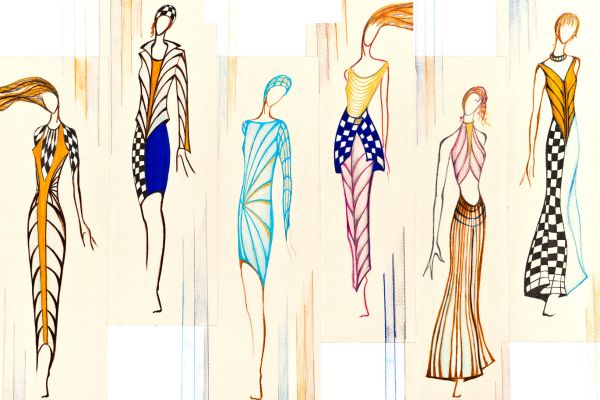
Fashion has always needed a way to tell its story before fabric ever touches the body. Long before runway videos, glossy campaign shoots, digital mood boards, and social media previews, there was the drawn image. A few lines on paper could suggest movement, status, elegance, rebellion, or desire. That is what makes the evolution of fashion illustration so fascinating. It is not just the history of drawing clothes. It is the history of how people imagined style, identity, beauty, and culture in different eras.
Fashion illustration has moved through many lives. At times, it was practical. At times, it was decorative. Sometimes it acted as a record of what people wore, and sometimes it shaped what they wanted to wear next. Even today, in a world crowded with photography and digital imagery, illustration still holds a special place because it can capture something a camera does not always catch: mood.
Early Fashion Images and the Desire to Record Style
The roots of fashion illustration go back further than the modern fashion industry itself. People have always been interested in documenting clothing, whether through paintings, manuscripts, prints, or portraits. In earlier centuries, clothing was closely tied to class, occupation, region, and social identity. Recording dress was a way of recording society.
Before fashion magazines existed, artists and engravers created images that showed the clothing of royal courts, city elites, and regional communities. These were not always “fashion illustrations” in the way we understand the term now, but they served a similar purpose. They showed how garments were worn, how fabrics fell, how silhouettes changed, and how taste moved from one group to another.
During the Renaissance and early modern periods, clothing appeared in portraits with careful attention to detail. Embroidery, collars, sleeves, jewels, and fabrics were painted almost like symbols. A dress was never just a dress. It showed wealth, family position, religious influence, and access to trade. Fashion imagery at this stage was deeply connected to power.
The Rise of Fashion Plates
A major turning point came with the rise of fashion plates in the seventeenth and eighteenth centuries. These printed illustrations showed the latest styles and circulated among people who wanted to keep up with changing fashion. For the first time, fashion imagery became more widely available beyond court circles.
Fashion plates were especially important in Europe, where French style held great influence. They allowed people in different cities and countries to see new silhouettes, accessories, hairstyles, and decorative details. A woman in London or Vienna could look at an illustration from Paris and understand what was considered fashionable.
These images were often highly refined. Figures stood gracefully, sometimes in elegant interiors or garden settings. The clothes were the focus, but the atmosphere mattered too. Fashion was already being presented as a lifestyle, not just a garment. The illustrations invited viewers to imagine themselves inside a world of taste, leisure, and sophistication.
Nineteenth-Century Fashion and the Magazine Era
The nineteenth century gave fashion illustration a stronger public voice. As magazines became more popular, illustrated fashion pages reached a growing audience. Publications aimed at women included detailed images of dresses, hats, gloves, coats, and eveningwear. These illustrations helped readers follow seasonal changes and social expectations.
This was also a period of dramatic shifts in silhouette. High waists, full skirts, crinolines, bustles, fitted bodices, and elaborate sleeves all moved in and out of fashion. Illustration was the perfect medium to explain these changes visually. It could exaggerate a shape just enough to make the style clear and desirable.
Fashion illustration during this time was both beautiful and instructional. It helped dressmakers understand construction details and helped readers imagine how an outfit might look in real life. In many cases, illustrations were accompanied by descriptions, patterns, or sewing guidance. Style and practicality lived side by side.
The fashion image became part of everyday aspiration. It was something readers studied, saved, copied, and discussed.
The Golden Age of Fashion Illustration
The early twentieth century is often seen as a golden age in the evolution of fashion illustration. This was when the art form became more expressive, glamorous, and closely linked with modern style. Artists were no longer simply documenting garments. They were creating atmosphere, attitude, and fantasy.
Illustrators such as Paul Iribe, Georges Lepape, Erté, and later René Gruau helped define the visual language of fashion. Their work was elegant, bold, and unmistakably artistic. Lines became more fluid. Figures became longer and more stylized. Clothes appeared with drama and personality rather than strict realism.
This period also reflected broader artistic movements. Art Nouveau brought flowing curves and decorative beauty. Art Deco introduced sharp geometry, luxury, and modern glamour. Fashion illustration absorbed these influences naturally. A fashion drawing could feel like a poster, a painting, and a style forecast all at once.
Couture houses and magazines relied heavily on illustration. Before photography became dominant, illustration was one of the main ways fashion reached the public. A powerful drawing could make a dress feel iconic before anyone saw it in person.
When Photography Changed Everything
By the mid-twentieth century, fashion photography began to take over the space that illustration had long occupied. Cameras could capture garments with realism, texture, and immediacy. Magazines increasingly favored photographic editorials, especially as printing technology improved.
This shift did not make fashion illustration disappear, but it did change its role. Photography became the preferred tool for showing clothes as they actually looked. Illustration, meanwhile, became more selective and more artistic. It was no longer the main visual language of fashion media, but it remained valued for its imagination.
In some ways, this made illustration freer. Without the pressure to document every seam or detail, illustrators could focus on energy, gesture, and interpretation. A quick sweep of ink could suggest elegance. A splash of color could suggest a whole season. The illustrated fashion figure became less literal and more emotional.
Fashion Illustration as a Designer’s Language
Even as photography grew, designers continued to rely on illustration in their creative process. Sketching remained a way to think. Before a garment is cut, fitted, and sewn, it often begins as a drawing. That drawing may be loose and private, or polished and presentation-ready, but it carries the first spark of the idea.
Fashion sketches help designers explore proportion, movement, fabric, and mood. They can test a sleeve, stretch a silhouette, or capture the feeling of a collection before technical details are finalized. This is one reason fashion illustration never truly loses relevance. It belongs not only to magazines but also to the studio.
A designer’s sketch can reveal personality in a way a finished garment sometimes hides. Some sketches are sharp and architectural. Others are romantic, messy, playful, or dramatic. The line itself tells us something about the mind behind the clothes.
The Digital Shift and New Creative Tools
The digital age brought another major chapter in the evolution of fashion illustration. Tablets, styluses, design software, and digital painting tools changed how illustrators work. Artists can now sketch, color, edit, layer, and share their work instantly. A drawing can move from a screen to a global audience within minutes.
Digital illustration has expanded the visual possibilities of fashion. Some artists create images that look almost hand-painted, while others use bold graphic styles, collage, animation, or mixed media effects. The boundary between fashion illustration, digital art, branding, and social media content has become much softer.
Still, the heart of the craft remains the same. Whether the tool is a pencil, brush, marker, or tablet, the illustrator is still interpreting fashion through line, color, shape, and feeling. Technology has changed the surface, but not the instinct.
Why Fashion Illustration Still Matters
In a world full of high-resolution photography, fashion illustration offers a slower kind of beauty. It does not need to show every detail. Sometimes it leaves space for imagination. That is part of its appeal.
Illustration can exaggerate the sweep of a coat, the delicacy of a dress, or the confidence of a pose. It can turn an outfit into a mood before turning it into an object. It can also make fashion feel more personal, because the hand of the artist is visible. Even digital work carries that sense of interpretation.
Fashion illustration also continues to connect the past with the present. Looking at older illustrations, we do not only see clothes. We see changing ideals of femininity, masculinity, elegance, luxury, freedom, and modernity. We see how fashion once dreamed about itself.
Conclusion
The evolution of fashion illustration is a story of adaptation. It began as a way to record dress, grew into a tool for spreading trends, became an art form in its own right, stepped aside when photography rose, and then returned with new energy in the digital age. Through all those changes, its purpose has stayed beautifully simple: to imagine fashion before it fully exists.
Fashion illustration reminds us that style is not only made with fabric. It is also made with vision. A drawn figure, a curved line, a wash of color, or a dramatic silhouette can carry the feeling of an era. That is why fashion illustration still matters. It preserves the dream of fashion, not just the garment.
