

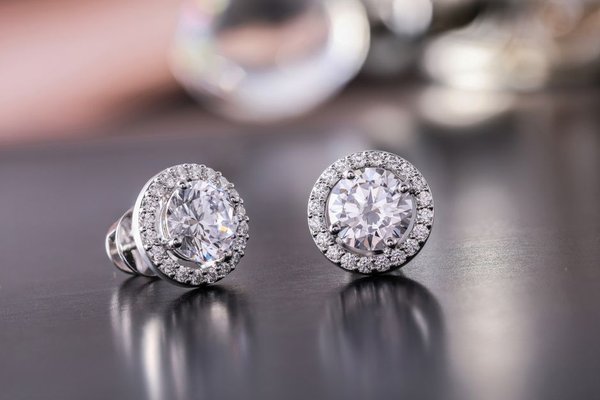
A ring can look dazzling under jewelry-store spotlights yet feel different in daylight. That is why the moissanite vs diamond jewelry decision deserves more than a glance at two sparkling stones. Both make beautiful rings, earrings, and pendants, but they create different visual effects, carry different price expectations, and need thoughtful care.
The useful question is not which gem is universally better. It is what you want to notice every time you wear it: rainbow flashes, a familiar diamond look, a larger center stone, or the meaning attached to a material.
Moissanite and Diamond Are Different Gemstones
Diamond consists of crystalline carbon. It occurs naturally and can also be grown in a laboratory. A laboratory-grown diamond is still a diamond, with essentially the same chemical composition and physical properties as a mined one.
Moissanite is silicon carbide, a separate gemstone. Jewelry-grade moissanite is typically laboratory-created because natural moissanite is exceptionally rare. It is among the most durable diamond alternatives, but calling it a lab-grown diamond would be incorrect.
Ask a seller whether a listing features natural diamond, laboratory-grown diamond, or moissanite. Marketing phrases such as “diamond-like” do not establish the stone’s actual identity.
Appearance: Similar Sparkle, Different Character
White flashes versus rainbow fire
Diamonds are known for their balance of white brightness, colored flashes, and contrast between light and dark facets. Their appearance depends heavily on cut quality and lighting.
Moissanite disperses light into spectral colors more strongly than diamond. The result can be vivid rainbow flashes, especially under spotlights. On a larger stone, that extra fire becomes more obvious. Some shoppers love the effect; others prefer the relatively restrained look of a well-cut diamond.
Compare stones by a window, under ordinary indoor lighting, and outside in the shade. A gem that seems spectacular under a jewelry counter light may look calmer during a workday. Videos in several lighting conditions help more than a single edited product photograph.
Color, clarity, and facet patterns
Both materials are sold in colorless and near-colorless appearances. Some moissanite can show subtle gray or yellow tones at certain angles, while diamonds span graded color categories. Neither label alone guarantees a particular look.
Moissanite is doubly refractive, so certain facet edges may appear doubled under close examination. Diamond does not show this optical characteristic in the same way. Most people notice overall sparkle before this detail, especially in smaller earrings.
Cost: Where the Price Difference Matters
For similar face-up sizes, moissanite generally costs substantially less than natural diamond and often less than laboratory-grown diamond. Prices depend on the seller, cut, size, setting metal, and design. Fixed savings percentages are unreliable when the stones and specifications differ.
Imagine choosing a solitaire engagement ring on a fixed budget. Moissanite may leave room for a larger-looking center stone or a sturdier gold or platinum setting. A smaller lab-grown diamond may suit someone who specifically wants diamond material without natural-diamond pricing. Natural diamond may appeal to a buyer who values geological origin.
Compare stones by millimeter dimensions, not just carat labels. Carat measures weight, and moissanite has a different density from diamond. A seller’s “diamond equivalent weight” for moissanite estimates visual size; it is not the stone’s actual weight.
Neither material is a guaranteed investment. Resale offers for finished jewelry can fall well below retail prices, particularly after the original markup.
Hardness and Everyday Wear
Diamond scores 10 on the Mohs hardness scale, while moissanite hardness is approximately 9.25. Both resist surface scratching extremely well. Yet the Mohs scale measures scratch resistance, not immunity to impact.
Diamonds can chip at vulnerable edges or corners, and moissanite can also be damaged by a hard blow. Settings are frequently the practical weak point: bent prongs, a worn band, or loosened accent stones can cause trouble before the center gem shows wear.
For someone who works with their hands, a protective bezel or low-profile setting may matter more than the difference in hardness. Remove rings before lifting weights, handling tools, or gardening. Think about whether a tall setting catches on sleeves or gloves. An engagement ring setting guide can help clarify these design trade-offs.
Care and Cleaning: More Alike Than Different
Both gems collect lotion, soap, skin oils, and dust, which can dull their appearance without damaging the actual stones. Gentle cleaning helps bring back their sparkle.
For a typical secure setting, mix mild dish soap with warm water, soak the jewelry briefly, and brush gently with soft bristles. Rinse in a separate bowl rather than over an open drain, then pat dry with a lint-free cloth. Avoid toothpaste, bleach, abrasive powders, and harsh cleaners that may damage metal.
Ultrasonic machines are not a universal shortcut. Vibration can loosen stones, and certain treatments or mixed-gem designs require caution. Have a jeweler inspect fragile, antique, or damaged pieces before machine cleaning.
Store jewelry separately to reduce accidental scratches, and have prongs and clasps checked periodically on pieces worn daily. A fine jewelry cleaning guide is also useful for understanding the needs of different metals and finishes.
Which Stone Fits Your Priorities?
Choose moissanite jewelry if you enjoy striking rainbow fire, want a generous-looking center stone, and prefer to direct more of your budget toward craftsmanship or other priorities. Its durability makes it a serious fine-jewelry option, not merely a disposable imitation.
Choose diamond if its particular appearance, identity, or symbolism matters to you. Decide separately whether natural origin is essential or whether a laboratory-grown diamond delivers what you want. A lab-grown vs natural diamond comparison helps frame that choice.
Whenever possible, inspect similarly sized, well-cut stones in comparable settings. Ask for clear disclosure of gem identity, metal purity, return terms, and any independent grading report. A reliable seller should explain these details without promising investment returns.
Frequently Asked Questions
Can most people tell moissanite from diamond?
Not always at a glance. In larger stones or bright directional light, moissanite’s stronger rainbow flashes may stand out. A trained gemologist can distinguish the materials using appropriate testing methods.
Does moissanite become cloudy over time?
Moissanite does not normally turn permanently cloudy from ordinary aging. Surface residue can temporarily dull its appearance, and cleaning usually removes the buildup. Damage or persistent discoloration deserves professional assessment.
Is moissanite suitable for an everyday engagement ring?
Yes. Its high scratch resistance makes it suitable for regular wear. A secure setting, sensible handling, and routine maintenance remain important, just as with diamond rings.
Is a lab-grown diamond the same as moissanite?
No. A lab-grown diamond is crystallized carbon and is diamond. Moissanite is silicon carbide, with different optical behavior and hardness.
Final Thoughts
The best diamond comparison is personal rather than a contest over sparkle or prestige. Moissanite offers abundant fire and strong value; diamond offers its own optical character and material identity. Compare actual stones in realistic light, account for the entire setting, and choose the piece that feels right to wear.
