

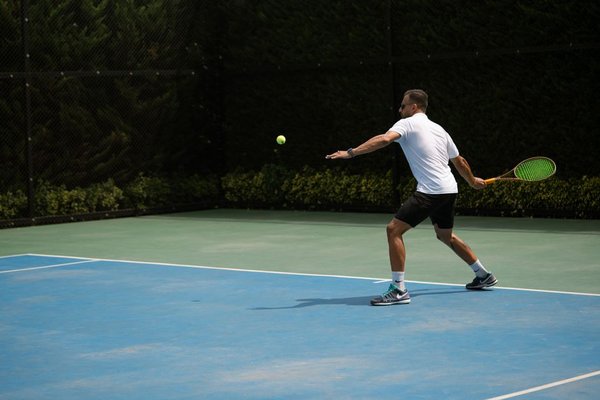
A tennis outfit can look polished in a mirror and still be annoying five minutes into a real rally. Playing tennis means repeated sprints, split steps, lunges, overhead reaches and fast changes of direction, so the best clothes are the ones you almost stop noticing once the point begins. If you are wondering what to wear to play tennis, start with movement, temperature control and court-safe footwear rather than with the “tennis aesthetic.”
For a casual hit, you do not need head-to-toe gear from a tennis brand. You do need clothes that stay put, let you reach freely and handle sweat. A practical tennis outfit for playing can be simple: a breathable top, flexible shorts or a skirt/skort, supportive court shoes and comfortable socks.
Start With Clothes That Move With You
Tennis asks more from clothing than an ordinary gym session. Your shirt should not pull across the shoulders when you serve, and your bottoms should not tighten during a wide lateral step. Stretch matters, but so does cut: even stretchy fabric can feel restrictive if the garment is too narrow.
Before wearing something to a match, try a quick movement test at home. Raise both arms as if serving, rotate your torso, take two deep side lunges and squat into a low ready position. If the top rides up, the waistband rolls or the fabric pinches, it will probably be more distracting on court.
Choose a breathable top
A lightweight performance T-shirt, polo, tank or sleeveless tennis top is usually the easiest choice. Moisture-managing synthetic fabrics and technical blends tend to dry faster than heavy cotton once you start sweating. Cotton can be comfortable for a light practice in mild weather, but during a long or hot session it may stay damp and feel heavier.
Pick bottoms you can sprint in
Tennis shorts, skirts and skorts are designed around movement, but ordinary athletic bottoms can work too. Look for a secure waistband, enough stretch for lunges and a length that does not make you keep tugging the garment back into place.
Ball storage is a useful detail. Many tennis shorts have pockets for an extra ball, while skorts and some fitted shorts use built-in undershorts. If you are shopping specifically for tennis, this feature can be more useful than decorative details. A related internal-link topic is tennis outfit ideas for active play.
Your Shoes Matter More Than the Outfit
If you buy only one tennis-specific item, make it the shoes. Tennis involves side-to-side movement, braking and pushing off in different directions. Tennis shoes are built with court movement and durability in mind, while many running shoes are mainly designed for forward motion.
The outsole also matters. Hard-court shoes are made for abrasive surfaces; clay-court models use tread intended to cope with clay and sliding; grass courts can have their own footwear requirements. For recreational tennis, check the rules of the facility and wear shoes that will not damage the surface. A tennis shoes guide is a natural follow-up if you play regularly on one court type.
You also do not generally need to dress all in white. Specific clubs and competitions may set dress standards, and Wimbledon competitors are required to wear almost entirely white, but that is not a universal rule for a local public court.
Build the Outfit Around the Weather
On hot days, lighter fabrics, ventilation and a cap or visor can make a long session more comfortable. Sunglasses can help with glare if they fit securely enough for movement. Sunscreen also belongs in the tennis bag for outdoor sessions.
In cool conditions, use removable layers instead of one heavy garment. A light warm-up jacket or long-sleeve top can be useful before play, then come off as your body temperature rises.
Imagine a 90-minute evening session that begins cool but feels much warmer after twenty minutes of rallies. A bulky hoodie may be comfortable while you wait for the court, yet frustrating once you sweat. A breathable base top with a light zip layer gives you a much easier way to adjust.
Small Details That Improve Comfort
Choose socks that fit smoothly without bunching inside the shoe and manage moisture well. Some players prefer slightly cushioned athletic socks for extra comfort during hard stops and repeated movement.
A supportive sports bra can also be an important part of functional tennis wear because serving and rapid changes of direction create plenty of upper-body movement. The ideal level of support is personal, so focus on a secure fit that does not dig in or restrict breathing.
Headbands and wristbands are optional. They earn their place if sweat regularly gets into your eyes or makes your grip feel slippery. Function should decide whether you need them.
What Not to Wear for a Serious Hit
Avoid clothing that forces you to manage it between points. Jeans, stiff fashion skirts, heavy casual layers and shoes with poor lateral support may look fine off court but are awkward for active play. Jewelry that swings, catches or needs constant repositioning can be distracting too.
That does not mean your outfit has to look technical or plain. Tennis fashion can still be expressive. Choose the color and silhouette you like after checking that the clothing stretches, breathes and stays secure. Another useful internal-link topic is tennis fashion and activewear that balances style with performance.
FAQ
Can I wear normal gym clothes to play tennis?
Yes. For recreational tennis, gym clothing can work well if it allows full shoulder and leg movement, handles sweat and stays in place. Tennis-specific clothing becomes more useful when you want details such as ball pockets, built-in shorts or court-focused cuts.
Do I need tennis shoes for my first session?
Dedicated tennis shoes are the better choice because the sport involves frequent lateral movement and sudden stops. If you are attending a club, lesson or tournament, check its footwear rules before arriving because some courts restrict shoes that can mark or damage the surface.
Do you have to wear white to play tennis?
No, not as a general rule. White clothing is strongly associated with tennis tradition, and some clubs or competitions have dress codes. Wimbledon uses an almost-entirely-white requirement for competitors, but ordinary recreational tennis usually allows a much wider range of colors.
What should a beginner wear to a tennis lesson?
Wear a breathable athletic top, flexible shorts or a skirt/skort, comfortable socks and court-appropriate tennis shoes. Add a cap or visor for outdoor sun and bring a removable layer if the weather is cool.
Choose Performance First, Then Style
The easiest way to decide what to wear to play tennis is to picture the movements rather than the photos. Can you serve without pulling at your shirt? Can you lunge without fighting the waistband? Can you move sideways confidently in your shoes? If the answer is yes, you already have the foundation of a good tennis clothing setup.
Style still matters, but let function set the boundaries. A breathable top, flexible bottoms, court-ready footwear and weather-appropriate extras will take you further than an outfit chosen only because it looks like tennis.
