

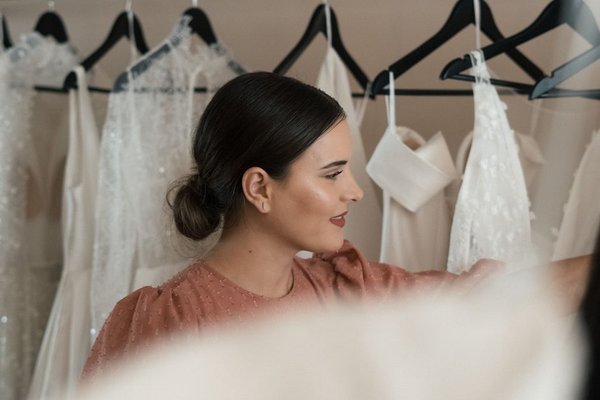
Choosing a wedding dress can become overwhelming quickly. One appointment introduces A-line skirts, another brings fitted mermaid gowns, and suddenly every consultant seems to be speaking a different language. Learning how to choose a wedding dress silhouette is not about searching for a shape that is supposedly “right” for your body type. Decide how you want to feel, move, and look on the day, then compare wedding dress shapes against those priorities.
Start With the Feeling You Want
Choose three words that describe how you want to feel in your dress, such as elegant, relaxed, romantic, modern, dramatic, or effortless. These words create a practical filter. A structured ballgown may suit a dramatic vision, while a fluid sheath may fit an understated beach ceremony more naturally.
Understand the Main Bridal Gown Silhouettes
A-Line
An A-line gown is fitted through the bodice and gradually widens towards the hem. It offers definition without feeling highly restrictive and works across formal and relaxed settings. Try this shape early because it provides a useful reference point for comparing fuller or more fitted designs.
Ballgown
A ballgown has a fitted bodice and a noticeably full skirt beginning around the natural waist. It creates a strong bridal statement and can make the waist look defined. Before committing, sit down, walk through a doorway, and practise turning. Skirt weight and width can affect how comfortable the dress feels after several hours.
Mermaid and Trumpet
Both styles follow the body before flaring out. A mermaid usually stays fitted to around the knee, while a trumpet begins widening higher, often around the mid-thigh. They suit brides who enjoy a sculpted, glamorous look. Test your stride and ability to sit, especially when the fabric has little stretch.
Fit-and-Flare
Fit-and-flare is fitted through the bodice and hips but opens more gradually than a classic mermaid. It offers shape with easier movement, creating a useful middle ground between an A-line and a tightly fitted gown. Crepe can make it sleek, lace adds softness, and tulle creates a more romantic effect.
Sheath or Column
A sheath or column dress falls relatively straight, following the body without a large skirt. It can look minimal, modern, and effortless. Lightweight versions work especially well for destination weddings and smaller venues. Because the cut is simple, good fabric and precise alterations are particularly important.
Empire Waist
An empire-waist gown is fitted beneath the bust and then falls loosely towards the floor. It creates a long, flowing line and feels less restrictive around the waist and hips. The position of the seam is crucial, so try more than one version before deciding whether the shape suits you.
Do Not Rely on Body-Type Rules Alone
Traditional advice often claims that certain silhouettes belong to certain body shapes. Those rules can be limiting. Two people with similar measurements may prefer completely different gowns because posture, torso length, shoulder line, fabric, and confidence affect the result.
Instead of asking whether a dress “hides” an area, notice what it emphasises. Consider the neckline, waist seam, skirt volume, and your overall reaction. Choosing a wedding dress becomes easier when you evaluate the whole look rather than judging separate body parts.
Remember That Fabric Changes the Shape
The silhouette name tells only part of the story. Mikado and satin hold their shape and create cleaner, more architectural lines. Chiffon and soft tulle move gently, lace adds texture, and crepe tends to show a closer outline.
A bride may dislike a stiff A-line but love a soft chiffon version. Another may find a tulle ballgown too romantic yet feel completely herself in structured satin. Compare fabric as carefully as shape. A wedding dress fabric guide is a useful next step when you have narrowed your preferred cut.
Match the Dress to Your Real Wedding Day
Your venue and schedule should influence the decision. A narrow restaurant aisle, outdoor steps, summer heat, or a long walk between the ceremony and reception can change how practical a gown feels. Ask whether the train can be bustled securely, whether the skirt catches around your shoes, and how the dress feels after ten minutes rather than ten seconds.
Consider your shoes, likely weather, transport, and time spent sitting. A bridal alterations timeline will also help you understand when hems, bodice adjustments, straps, and the bustle need to be finalised.
Use a Three-Dress Comparison
At your appointment, try three deliberately different gowns early: one A-line, one fitted style, and one fuller ballgown or relaxed sheath. Take front, side, and back photos if the boutique permits. Compare how each dress feels while walking, sitting, and turning.
Imagine a bride who arrives convinced she wants a mermaid gown because she loves fitted evening dresses. She likes it in photographs but keeps adjusting the skirt. An A-line feels comfortable but too traditional. A fit-and-flare gives her the definition she wanted with enough room to move. That middle option becomes clear only because she tested contrasting silhouettes rather than ten similar dresses.
Bring one or two people who understand your taste. Too many opinions can distract you from your own reaction. Reading what to wear wedding dress shopping beforehand can also help you choose suitable underwear and shoes for a more accurate fitting.
Check Fit and Alteration Possibilities
Sample gowns rarely fit perfectly, so focus on the underlying shape while learning what alterations can achieve. A seamstress can refine the bodice, adjust straps, hem the skirt, and create a bustle. Changing the basic cut, waist position, or structure may be more difficult and expensive.
Ask how the gown will be ordered in your size and where adjustments are likely. The right dress should work with your body rather than depend on discomfort or constant correction to look good.
Frequently Asked Questions
Which silhouette is the most versatile?
A-line is often considered adaptable because it defines the upper body while allowing room through the skirt. However, fabric, neckline, seam placement, and personal preference can matter as much as the basic shape.
How many silhouettes should I try?
Try at least three contrasting shapes before narrowing your search. Even with a strong preference, comparing an A-line, a fitted gown, and a fuller or straighter style gives you a clearer view of proportion and comfort.
Can a petite bride wear a ballgown?
Yes. Focus on bodice length, waist placement, skirt volume, and the scale of embellishment. A well-proportioned ballgown with careful alterations can work beautifully on a petite frame.
Should comfort influence the final choice?
Absolutely. You should be able to breathe, sit, walk, and enjoy the day. If a dress only looks good while you remain still, try a similar silhouette in a softer fabric or with a less restrictive cut.
Choose the Silhouette That Feels Like You
The best silhouette is not the one a chart assigns to your body. It is the one that supports your plans, reflects your taste, and lets you recognise yourself in the mirror. Compare contrasting shapes, pay attention to fabric and movement, and judge each gown by how it feels as well as how it photographs. When your priorities lead the decision, the options become far less overwhelming.
